.png)
.png)
Our ongoing commitment to our surf forecasts.
Breaking down the complexity of swells into information that you can use to plan your next surf is what we do. It’s what motivates us, and we’re always looking to make our forecasts even better.
We’ve also heard from you—through reviews, surveys, and in the lineup—about how you’d like us to do better here.
That’s why our team is focusing more than ever on improving our forecasts and the clarity of the information we provide, helping us all make more informed decisions about when and where to surf.
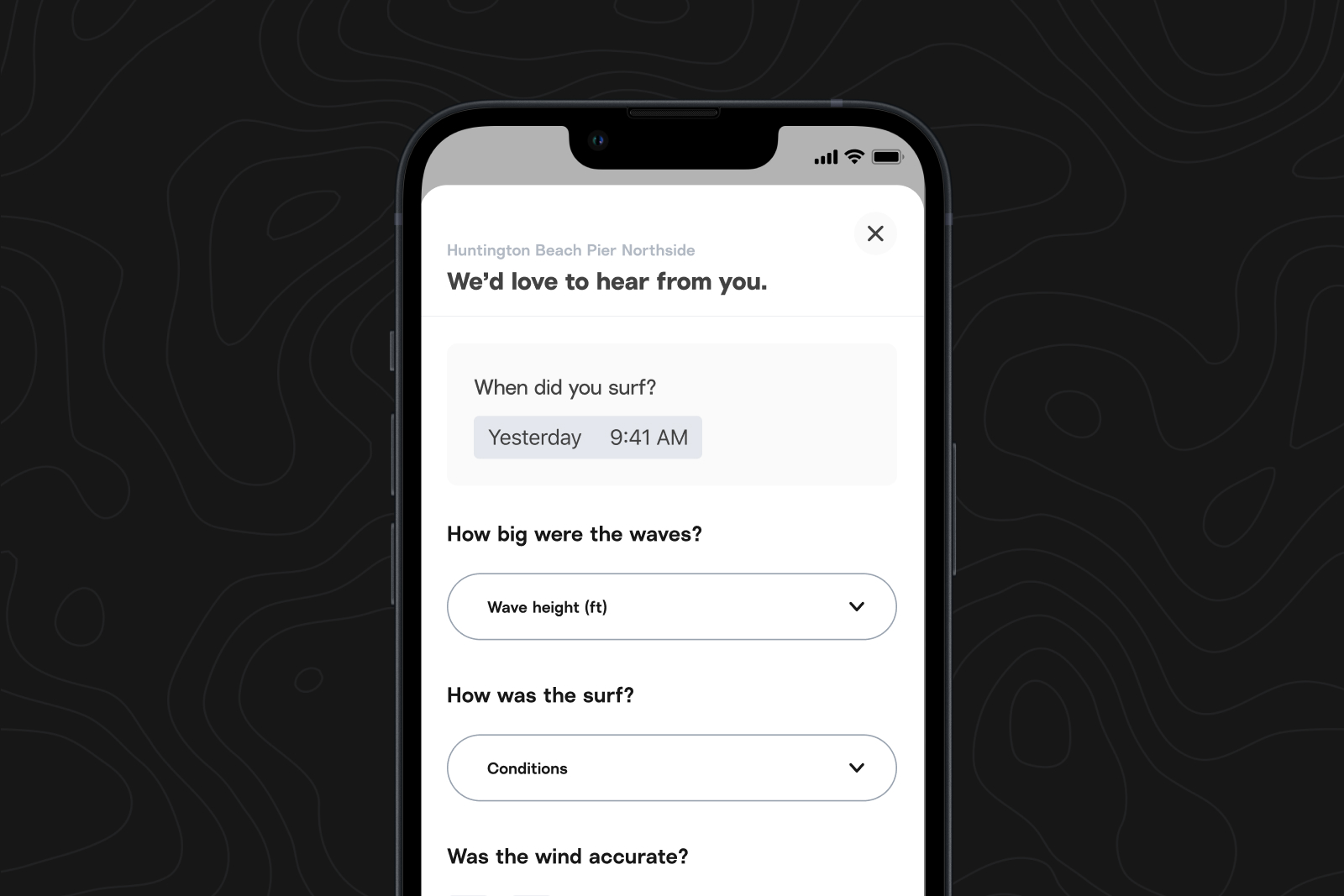
We couldn’t make these changes without your input and observations on our forecasts and forecast tools. Keep sharing your feedback through prompts on spot pages or reaching out to us at [email protected], and stay tuned for what’s coming next.
The power of observations
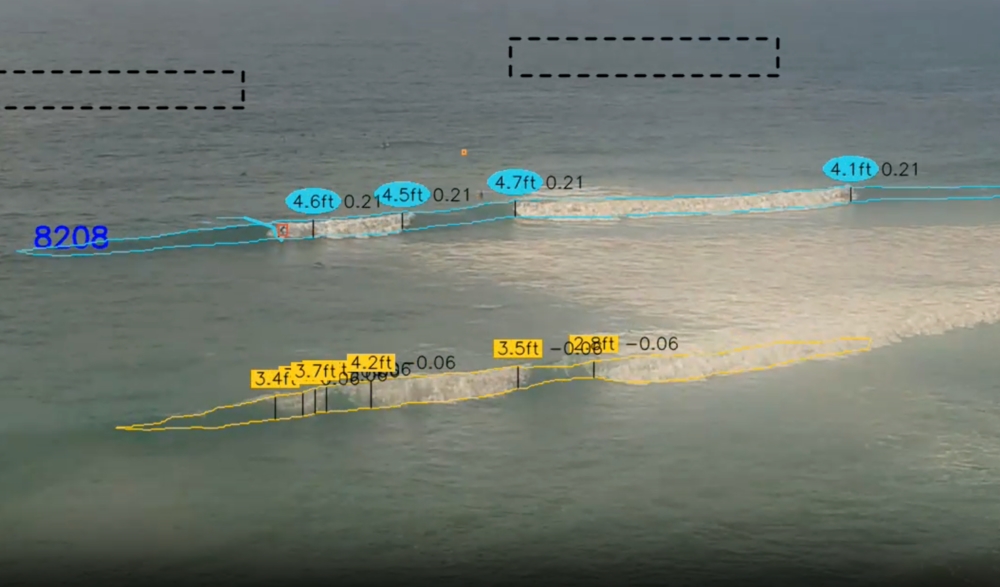
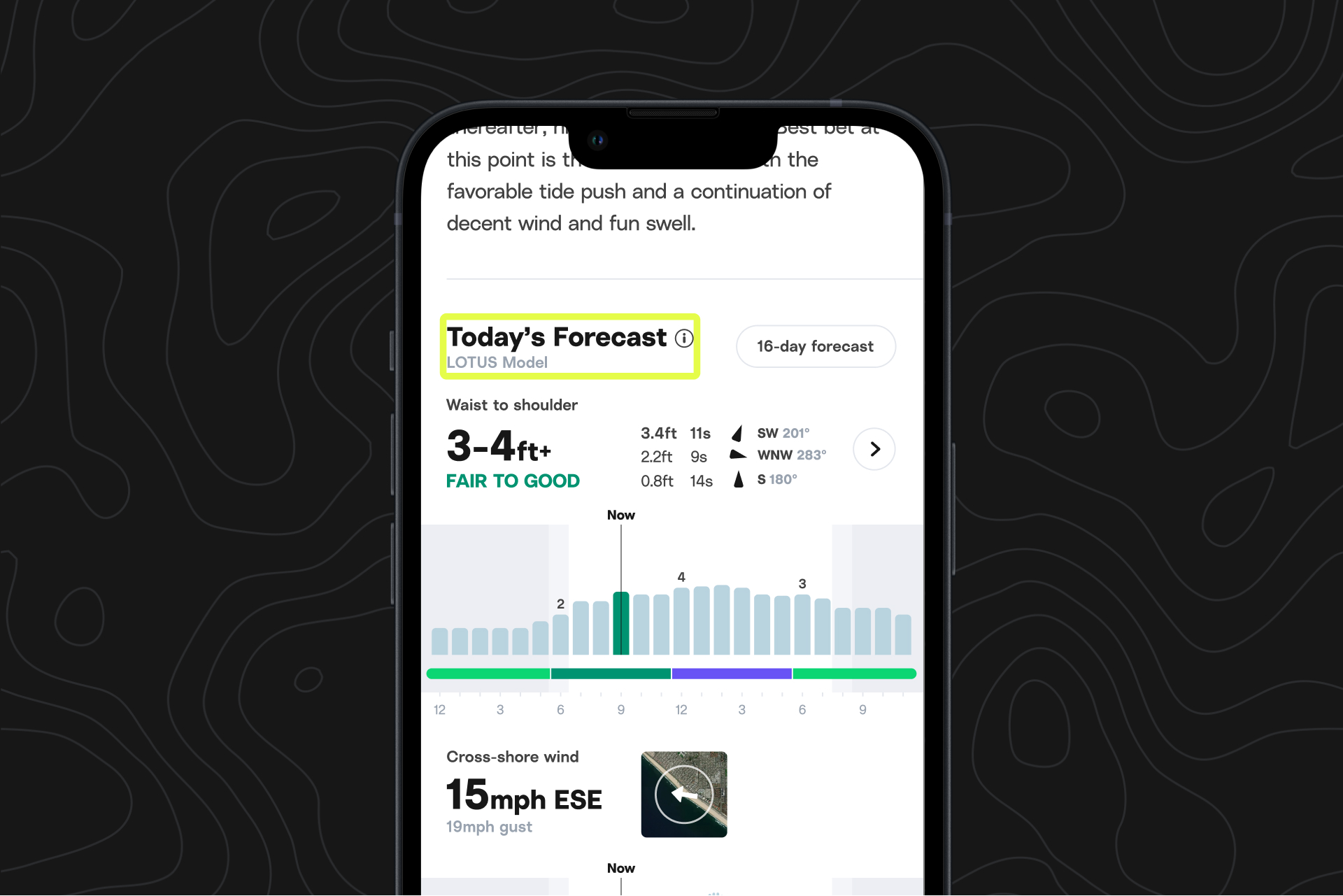
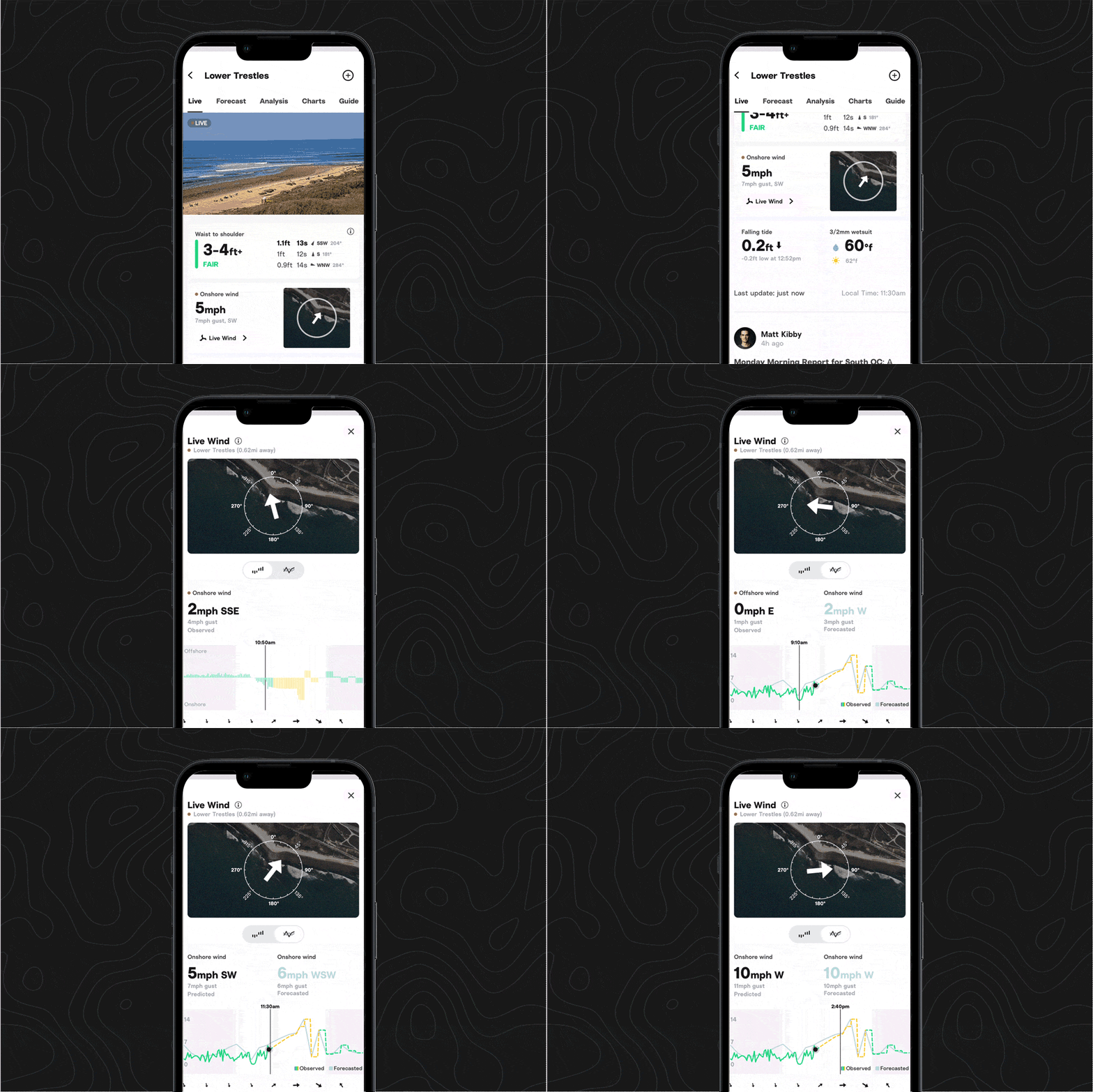
We’ve made updates throughout the app to clearly label when wind, surf heights, and ratings are observed by our network of real-time data sources; our Smart Cams, our Live Wind stations, and our forecasters.
We’ve also made it more clear where these data points are coming from a forecast model.
The full set of updates is now available on iOS and Web, and will be rolling out to Android over the coming weeks.
Why does this matter?
Forecasts don’t always turn out as predicted, whether that’s surf, weather, or otherwise. That’s why, at hundreds of spots around the world, our team monitors the surf and provides real-time observations twice per day.
We also collect real-time breaking wave height measurements and wind observations from our network of Smart Cams and Live Wind stations.

Real-time observations like these are particularly valuable when models aren’t aligning with what the surf actually looks like, or, for example, if a swell arrives early.
These updates will give you more transparency around the data you’re looking at when you check the surf, allowing you to set your expectations before your feet hit the sand, and plan better sessions in the future.
What's changed
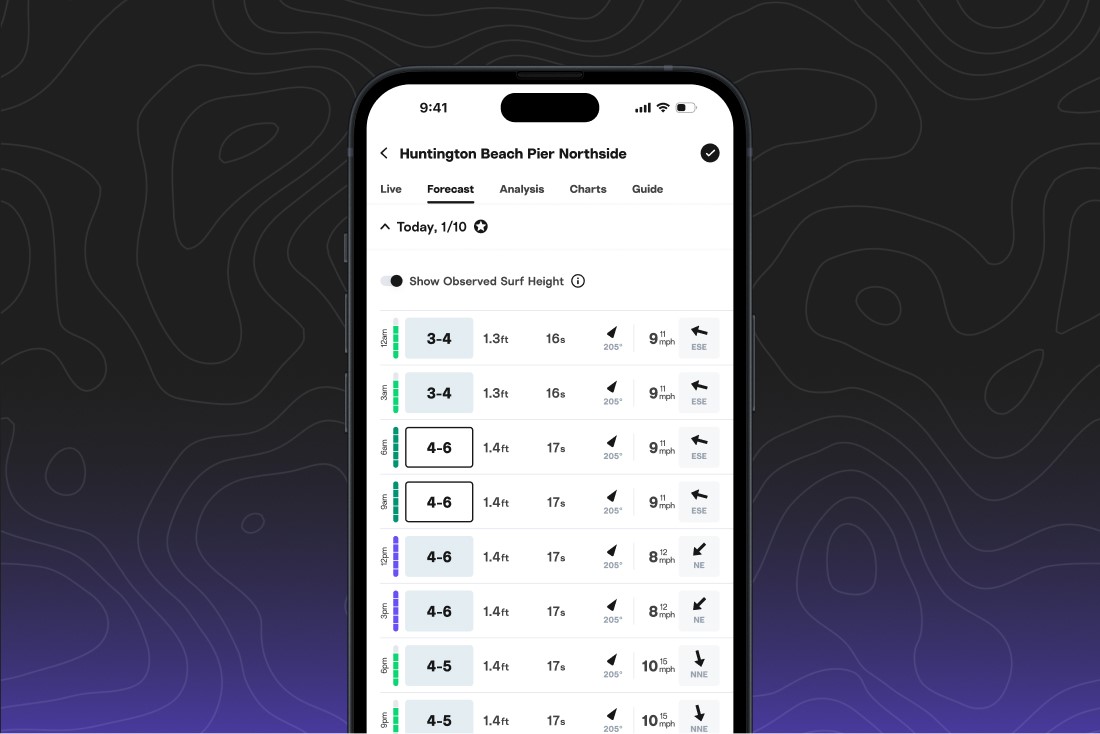
Any time a surf height, wind reading or condition rating is observed, you’ll see an “Observed” or “Observed by …” label.
If the data is not observed, we’ll notate where that data is coming from.
Where does observed data come from?
Our observations come from three sources: our Smart Cams, our wind stations, and our forecast team:
- Our forecasters provide observations on both surf height and condition ratings twice per day at many spots around the world.
- Our Smart Cams provide observations on surf height every 10 minutes during daylight hours.
- Live Wind stations provide real-time wind data on speed and direction every 10 minutes.
More to consider
- We predict breaking wave height at the spot level for over 10,000 spots around the world.
- LOTUS, our custom forecast model, has been trained on years of forecaster observations—the only surf forecast model with a validation data set.
- We continue to train and improve the model with both forecaster and smart camera observations.
Getting breaking wave height forecasts right at more than 10,000 spots every hour of every day is difficult, but it’s what we strive to do. We’re continuing to make improvements, largely thanks to your input, your observations, and your membership. Keep it coming, and stay tuned for more soon.
Updates to ratings
We’ve updated how we show ratings in the app. The ratings themselves and how they’re calculated have not changed, but we are currrently working on more improvements.
5-point bar scale
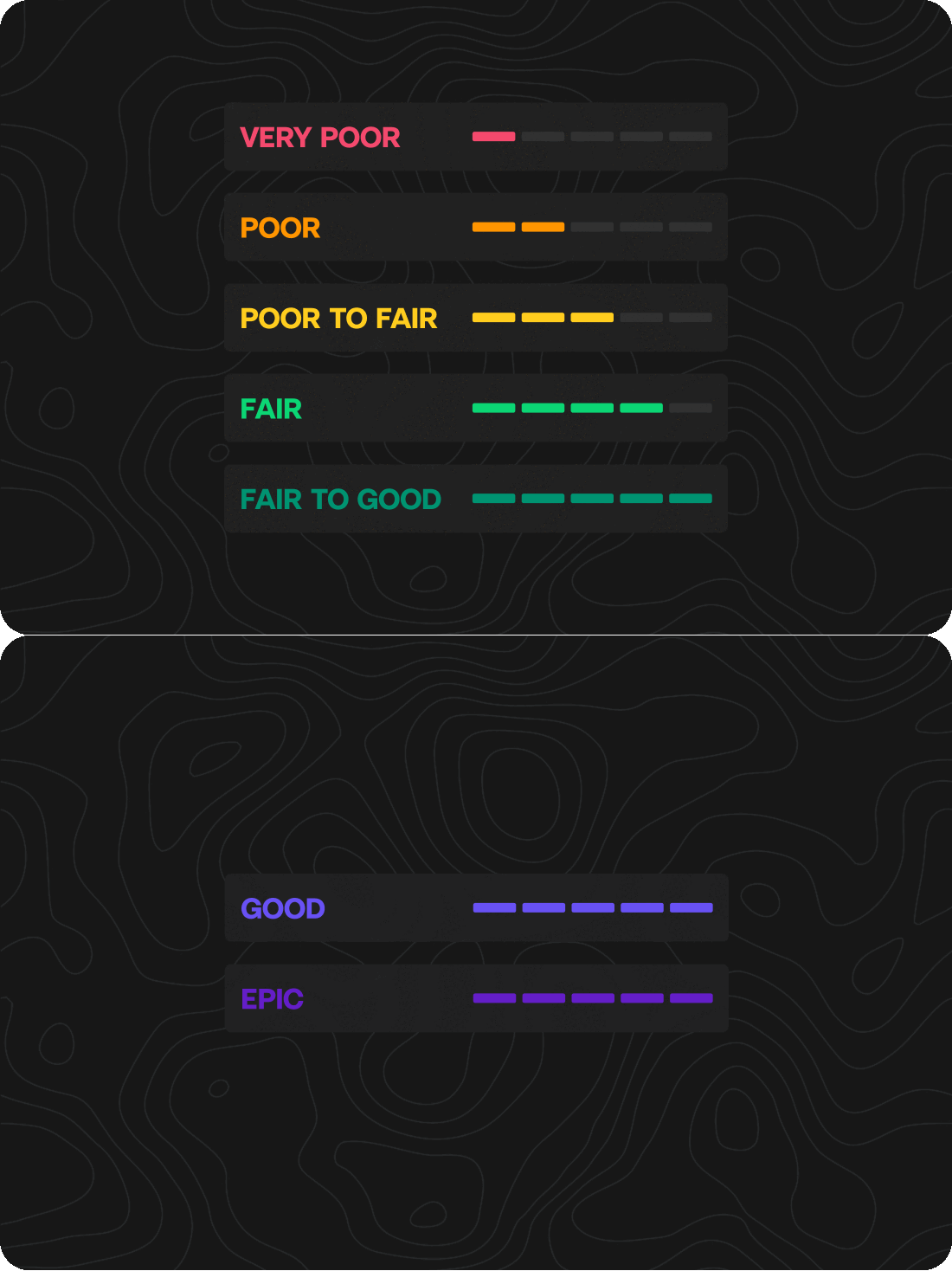
You’ll now see condition ratings on a 5-point bar, with the following assignments:
What about Good and Epic ratings?
These ratings still exist, and will override a 5-bar slot of Fair to Good when conditions are Good or Epic. We’ve made this change because Good and Epic ratings can only be assigned by forecasters who have observed the conditions.
How should I use ratings?
Surf ratings are meant as guides—not guarantees—to help you focus attention on potentially optimal surfing conditions.
Use our ratings along with your own insights to maximize your chances of finding the best waves possible for your preferences.
Some suggestions from our team:
- Use ratings as a comparative tool: Use ratings to compare potential sessions throughout the day or the week. A higher rating within your typical surf spots often indicates a time or day to look into further.
- Combine ratings with local knowledge: There’s no substitute for local knowledge. Ratings and surf heights should be used as a starting point for determining where and when you’ll surf. Always consider your local knowledge of tides, banks, sandbars, and seasonal factors. Our spot guides are a great place to start, created with input from local experts.
- Dig deeper: In addition to our condition ratings and forecasts, we provide detailed information including swell direction, tide, wind data, wave energy, and more, to help you gain a more complete picture of what you can expect in the water.
- Learn what you like to surf: You might find that your favorite days at your homebreak are when the forecast says, “Fair” rather than, “Good” or “Epic.” There are a lot of factors other than the condition rating that reflect what a fun session looks like for your unique surf life, including your board selection, skill level, what kind/size of crowds surf your spot, and your wave preferences. Get out there and track what ratings reflect the conditions you enjoy surfing.
What's important to know about ratings?
- At most spots, our current version of model condition ratings uses surf height and wind conditions to estimate a rating. This means that ratings not provided by our forecasters can miss important factors, such as prior winds that have left residual chop on the surface, or a very high tide that slows conditions at tide-dependent spots.
- Ratings are relative to each spot’s potential. Ratings take into account regional and spot-specific nuances. A “Fair” rating at Pipeline, for example, will not look the same as a “Fair” rating at an average beachbreak.
- Our team is actively investing in improving our model data sources, including how ratings are generated and what goes into them.
How are condition ratings generated?
Surf ratings update hourly based on our swell model, LOTUS, which takes into account surf height and wind conditions.
Our forecast team regularly observes surf conditions at hundreds of spots around the world, taking into account more factors in their assessment than just the swell model.
When conditions don’t match the swell model, our forecasters will update the condition ratings as part of their reports.
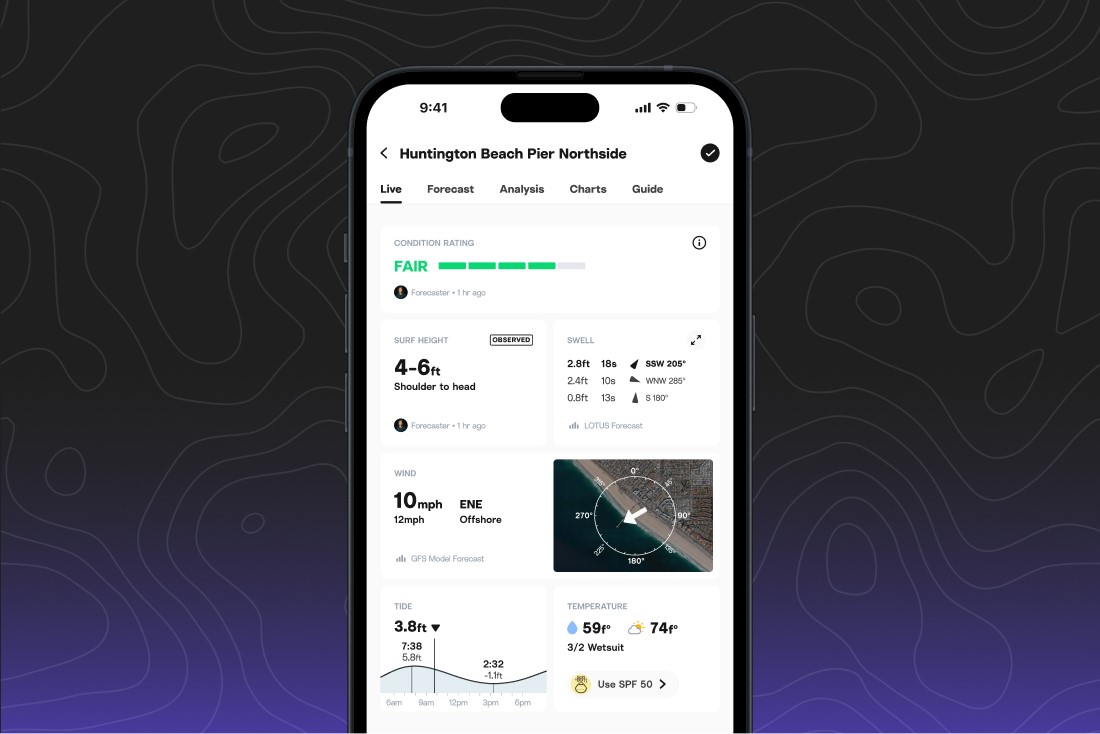
Our new labels show whether the condition rating is coming from our swell model, or from one of our forecasters.
Forecast performance updates
Our team will start sharing updates on how our LOTUS swell model performed—for better or for worse—for the notable swells of the last month, pulling back the curtain on exactly what we look at when comparing forecasts vs. reality, and how we use that information to improve forecast accuracy moving forward.
What we'll cover
- Swell summaries: We’ll pinpoint the last month’s notable swells at a handful of spots around the world—some of which may have had more than one over the month.
- Forecast vs. reality: We'll reveal the margin of error from the swell model, determining what caused inaccuracies and inconsistencies, and explaining how we can train the model to account for these factors moving forward.
- Visual examples: View charts and cam screenshots comparing the forecasted wave height, human observed surf height, and camera observed surf height.
You can read our performance updates here.