.png)
.png)



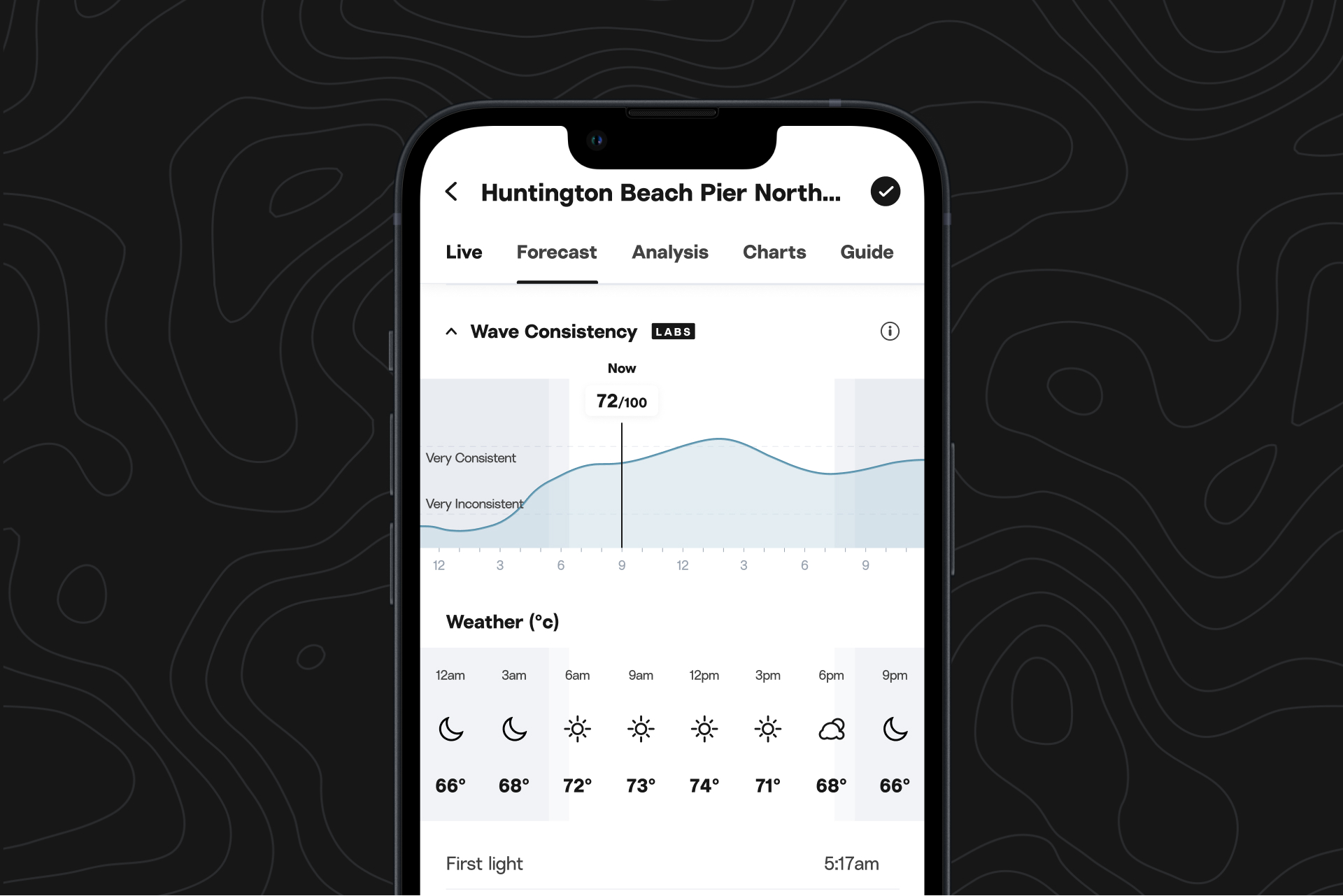
Will it be pumping or lully? Wave Consistency will tell you.
We’ve all experienced those sessions where it feels like there are more than enough waves to go around, as well as those days where you’re waiting for ages between sets.
We’ve developed a new metric, Wave Consistency, to predict how regular the set waves are at a specific spot to give you an idea ahead of time.
How should I use it?
Consistency helps you to make the most out of a session—choosing the right spot, picking the right board, or adjusting your spot in the lineup—by giving you a sense of how consistent set waves will be.
The higher the number, the more sets and waves you can expect. It can also help you determine how intense the paddle out will be and whether you’ll be able to take advantage of lulls to sneak out the back.
How does it work? What’s behind the metric?
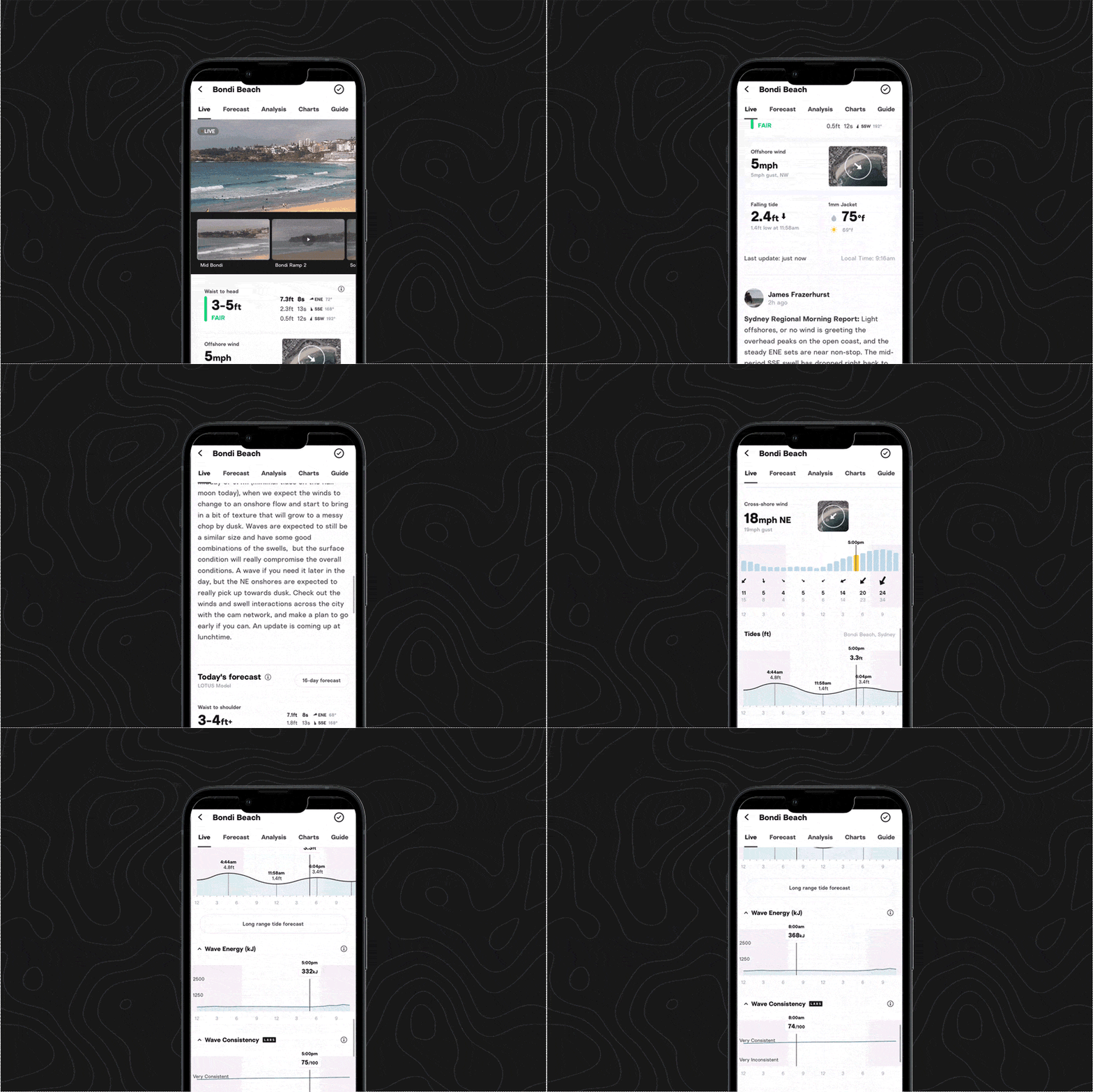
Wave Consistency predicts the frequency of waves every hour, at every spot, on a scale out of 100. For example, if the score is 20/100 it might feel a bit slow or lully. If the score is 80/100, your chances of riding more waves (or copping more sets on the head) are higher.
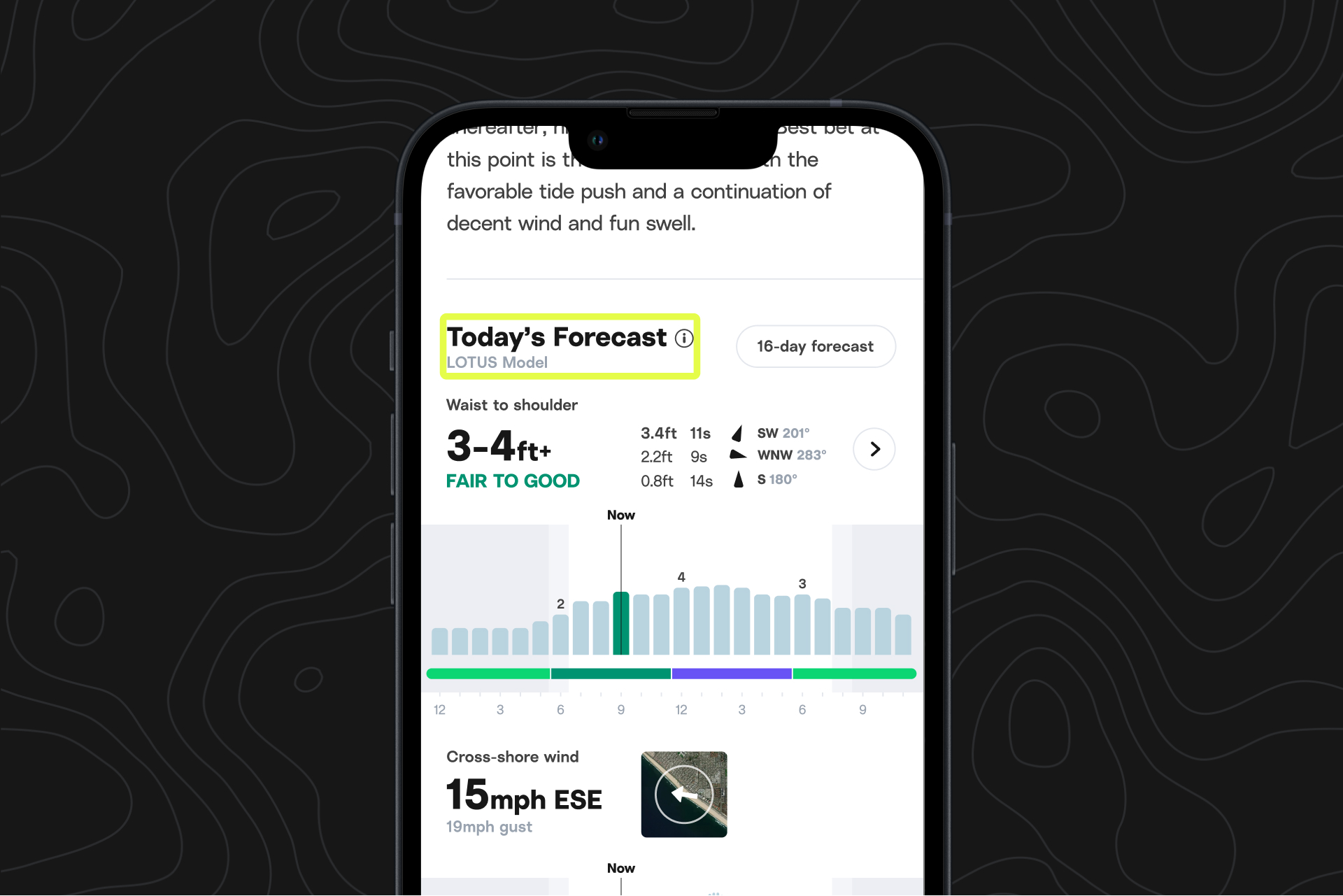
We’re putting a value on how “setty” the surf will be and how many waves there will be in a set. We derive this from our wave model, LOTUS, by predicting how many waves will exceed a certain wave height threshold for that spot. The higher the score, the more often that threshold has been exceeded (more sets).
The scale is standardized across spots, so you can compare Wave Consistency at your favorite breaks, along with swell height, wind, and tide before you head out.
Where can I find it?
Find this metric at the bottom of every spot page under “Wave Consistency”. Available now to Premium and Forecast members.
FAQ
Can you have a 4ft surf height with a low and high Wave Consistency number?
Yep, the Wave Consistency score can vary even if the forecasted surf height remains the same.
You’re predicting a high wave consistency but it’s huge and not surfable - what’s the deal?
The Wave Consistency metric predicts the frequency of the set waves and is not considering the quality of them. Our forecasts already provide information on height and quality.
It’s generally true that long-travelled swell of the sort surfers get excited about is often less consistent than short-period wind swells.
Why is the Wave Consistency score almost 0 but it’s not forecasted to be flat?
The score focuses on predicting the occurrence of set waves rather than all waves. This means that even when the forecast isn't entirely flat, the score may drop if these key set waves are few and far between – particularly in scenarios involving very short-period wind swells.
Everything else you need to know.
As a Surfline Labs feature, Wave Consistency is still in its early phases, and the UI and data models behind it may continue to evolve as we test it out and receive feedback from members. Feel free to reach out with your thoughts at [email protected].
What is Labs?
Surfline Labs gives you a window into the development of the latest features we’re bringing to Surfline, and the opportunity to help them reach their full potential. It’s like stepping into a shaping bay, giving the shaper feedback as a new surfboard model comes to life, testing it out, and making notes so the shaper can try a new iteration, until you get the final result—a perfect board.
Labs features are experimental and the data models behind them are works in progress, so set your expectations accordingly. They will often be available for a limited time, and we may polish and ship them, or decide they don’t make the cut and remove them. Some features will be available to all, and others will only available to subscribers.