
Southeast
The surf here is not world-class, hell, it’s barely even country-class. That said, from North Carolina’s south-facing Crystal Coast to Southern North Carolina’s south-facing beaches can get pretty good. And South Carolina is basically a more wholesome, more secure, more docile adaptation of North Carolina. Unfortunately, the ocean in Georgia rarely makes a peep.
The Waves
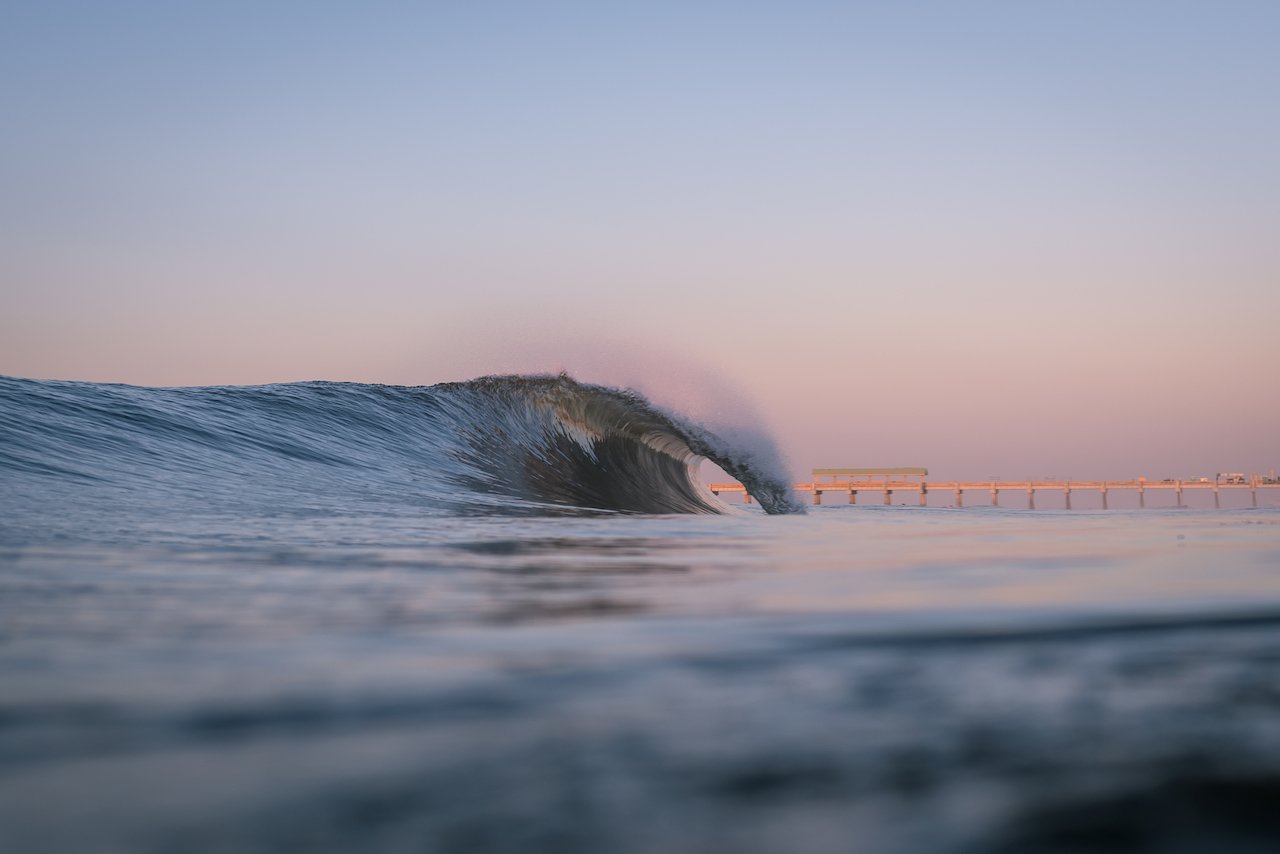
Folly Beach Pier
On average, the waves at Folly Beach Pier are considerably less powerful than whatever’s on tap at the Washout, but probably a bit more powerful than most other South Carolina beachbreaks. Big (but not too big) NE swells will often produce long, occasionally barreling lefts off the south side of the pier. Folly Beach Pier won’t really hold much more than a foot overhead.

C-Street Wrightsville Beach
"C" for crowded, "C" for crammed, "C" for crazy when rideable waves arrive, C Street remains the hotbed for surfing action in Wrightsville. The waves can get good, so sometimes it's "C" for consistent -- just come prepared to share the lineup with all manner of waveriders.

Oceanana Pier
Running only 29 miles from Bogue Inlet to Beaufort Inlet, the Crystal Coast goes largely unnoticed next to its big barrier island brother to the north, and while the surfing action is mostly concentrated around the piers, make no mistake: the waves can crank, especially during a big south swell.

Washout
With a number of jetties and varied coastline, Folly Beach has a number of different spots. All of Folly is lined with jetties. They've done a questionable job of protecting the beach, but they've produced lots of different peaks. The best spot at Folly is called the Washout. It's a long stretch of jettied beachbreak that can break with a tremendous amount of power on northeasterly swells or on hurricane swells. Beware of jetty rocks, underwater debris and current on larger swells. Take Highway 17 south of Charleston, then take Highway 171 to McKevlin's surf shop. Buy wax, head East onto East Ashley. Park along the beach.

"The vibe is just pure surf stoke. That's one of the coolest things about where I'm from is that everyone is just so stoked to see other surfers."
When to Score & Seasonal Surf Data
Know exactly when to score — powered by our expert historical forecast data.
Decades of spot-specific swell info — combined with forecaster insights — show your best chance to score, found only on Surfline.
Time to score

Forecaster reports
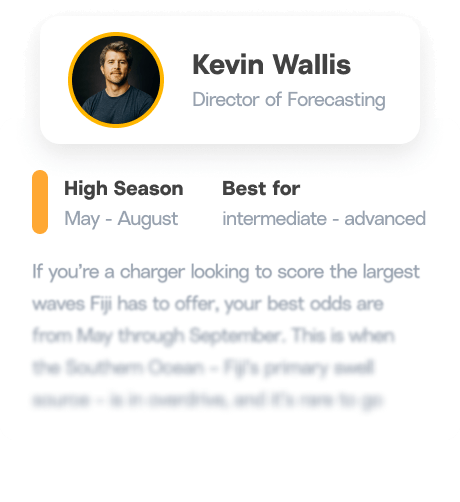
Seasonal Surf Data

The Southeast, According to...
Cam
Richards
South Carolina's most famous pro offers insights into this unique zone.
What makes the Southeast a special destination for surfers?
I think the coolest part about surfing in our area is how new it feels to so many people. Every time you paddle out, someone says, “Whoa, I didn’t even know you could surf here.” Growing up, I always loved that—surfing next to my peers while visitors from Ohio or wherever would watch in amazement, wondering what we were doing. It feels a little exotic, and I love that.
One of my favorite things is how uncrowded it is. When there are fun waves in my hometown of Garden City, I’m usually surfing by myself. If I want company, I have to go find people to surf with. That’s special. These days, it’s hard to find your own sandbar, but when there’s enough swell here, you don’t have to worry about crowds. And if you do run into anyone, they’re usually stoked to see you and happy to share waves, which just makes the session better.
What kind of waves can visiting surfers expect?
Our waves break quick, so you have to be fast to your feet. We get good sandbars, and if we ever had consistent, solid swell, I honestly think this could be one of the best beach breaks on the East Coast. The problem is the continental shelf—by the time the swell energy gets to us, there’s not much left. The waves are usually short and peaky, which makes them fun. If it’s a northeast swell, you’re getting all lefts; southeast gives you all rights. With a little ground swell, you can go both ways—really punchy and playful.
I always tell my friends in California: when it’s one to two feet there, you can’t even surf—it’s not worth it. But when it’s one to two feet behind my house, it’s the most fun little wave you’ll ever ride. It’s funny—people don’t really believe me until they visit. I’ve had friends like Noah Schweizer and Evan Geiselman come to town when we had a bit of swell, and even they were blown away. They’re like, “Wow, this is a really fun knee-high wave!”
What’s the vibe?
The vibe here is pure surf stoke. Everyone is curious, friendly, and just happy to see other surfers. They’ll ask about your board, what you’re riding—there’s no ego. If you can surf well, people are genuinely intrigued and stoked to share the lineup. Southern hospitality runs deep here. I’ve surfed places with heavy localism, and I respect that, but it’s not something we really have here. I was born and raised in South Carolina, but I can’t imagine ever having to “pull the local card.”
What should surfers bring?
As far as boards go, bring something with plenty of volume but on the shorter side, since our waves are fast and tight. I like riding a standard thruster, usually two to three inches shorter than my normal shortboard. A boxy rail helps. Basically, bring your favorite grovel board. You can leave the high-performance shortboard in the car—you won’t need it, even on the best day of the year.
When is the best time to score?
Our swells come from big storms off the coast, just like the rest of the East Coast. A good windswell that switches offshore can be super fun, but you have to be quick. We usually get an hour of good waves where places like the Outer Banks get a whole day. If it goes offshore at midnight, don’t wait until morning—it’ll look like a lake by then.
Same goes for tides. When there are waves, you paddle out—don’t wait. We have big tide swings, sometimes six feet, so you might only get an hour of good surf on the rising or dropping tide. Some days low tide works, some days high tide works—you never really know. If you see a fun wave, get out there.
What else is there to do when you’re not surfing?
Outside of surfing, there’s a ton to do. My dad likes to joke, “Myrtle Beach is great if you like putt-putt.” But seriously, the golf here is world-class, with hundreds of courses to choose from. Fishing is incredible. There are scenic restaurants on the water—yes, touristy, but in a good way—and most are locally owned. Boating and other water activities are always an option, and if you want a cold drink, there’s no shortage of spots.
What’s your favorite local cuisine?
Local food? I’m a sucker for good Southern barbecue.
Where can people learn to surf?
Our surf shop (Village) runs camps and private lessons all summer.
What are some things people should be aware of when it comes to local culture and customs?
As for surf etiquette, it’s simple: respect the place and the people. Pick up your trash. Treat others how you’d want to be treated if they visited your homebreak, and you’ll be fine.
Any other local tips?
If you have a day off and want a little road trip, most locals head to Wrightsville Beach for really fun waves. Carolina Beach is a mellower option. Ocean Isle breaks a little farther out and can be great. Folly Beach is super punchy and fun, more shorebreak-style but with a lot of power. Honestly, when one spot is good around here, they’re all usually good—you just pick your poison.
Travel Essentials
Local scene
You’re deep in the heart of southern hospitality. Even the ever increasing number of transplants from the North soften up around the edges after a while down here. A smile and hello will always go a long way, even if it's obvious you're just visiting. The surf doesn’t get very good often, and when it does you're more likely to find locals just excited and willing to share waves rather than gate keep. Mind your manners and you might make a new friend.
All the larger coastal cities boast several surf shops, and people surf year round. There is not as much storied surf history here in comparison to Florida or the Outer Banks, but there have been devoted crews of surfers along this stretch of coast for more than 50 years. In spite of the lack of quality or consistency, there is a pool of talent in every beach town. Universities keep a steady stream of frothing youths engaged, and there are local and board riders circuit contests sprinkled across the calendar.
What to bring
You really only need to bring two boards. A longboard and performance fish/shortboard cover 99% of the days along this stretch of coast. It's so rare that one would want or need anything else that it really doesn’t even bare mention. Generally the surf is small and fairly slow, with shorter period swells requiring a bit more foam. Boards that can fly over flat spots enable you to get the most out the average day of surf. The water is bathwater warm in the summer and pretty darn cold in the winter, but large fluctuations in temperate do not occur overnight. Generally plan on boardies and a rash guard in the summer, incrementally adding layers until you're in a fullsuit with booties gloves and hood for the depths of colder winters. Sunscreen and bug spray are a good call, particularly if you are going to be headed out to one of the more remote islands for the day. You may as well pack a snappy outfit too, as there are high quality options for dinner and nightlife in the more populated areas.
How to get there
Fly in to Wilmington, Myrtle, or Charleston, rent a car or uber to your beachside rental. That’s it easy as pie.
Downtime
Taking into account the fact that the surf is poor or flat far more often than it is worthwhile, there are a myriad of activities to take part in when you aren’t surfing. The Charleston area is full of history, culture and high quality food. Myrtle Beach is loaded with both full sized and mini golf courses, water parks, various show and music halls. Wilmington offers a mix of old world charm along the riverfront downtown, with contemporary beach town amenities out by the water. The Crystal Coast offers more of relaxed beach town setting with no major metro close by. Fishing and boating in general is hugely popular as well. Vast wildlife refuges still untouched by modern development offer glimpses into a time before houses lined the dunes. It is a special part of the country and you would be doing yourself a disservice if you didn’t get out to see some of it while you are in town.
Quick Tips
Travel Time
LAX: 6 hours, 30 minutes
Heathrow: 10 hours, 42 minutes
SYD: 21 hours, 37 minutes
Connectivity
Broadband is everywhere.
Currency
US Dollar.
Avg. cost of...
Cup of coffee: $3 USD
Lunch: $22 USD
Beer: $5.25 USD
Hotel room: $125 USD
Visa Requirements
Visitors may require a visa, depending on their nationality and/or the purpose of their trip.
Drinking water quality
Generally fine everywhere.
Hazards
Long flat spells. Heatstroke. Sore wrist from too much golfing.
Cash, card, crypto
This is America, the world’s largest economy, so money talks. Most businesses accept major credit cards, some probably even take crypto. U.S. dollars are still a thing, too, and you’re never too far from an ATM.
Best first surf trips.


Have feedback on this zone? Let us know [email protected]
Questions about booking with Surfline Travel? Check out our FAQs